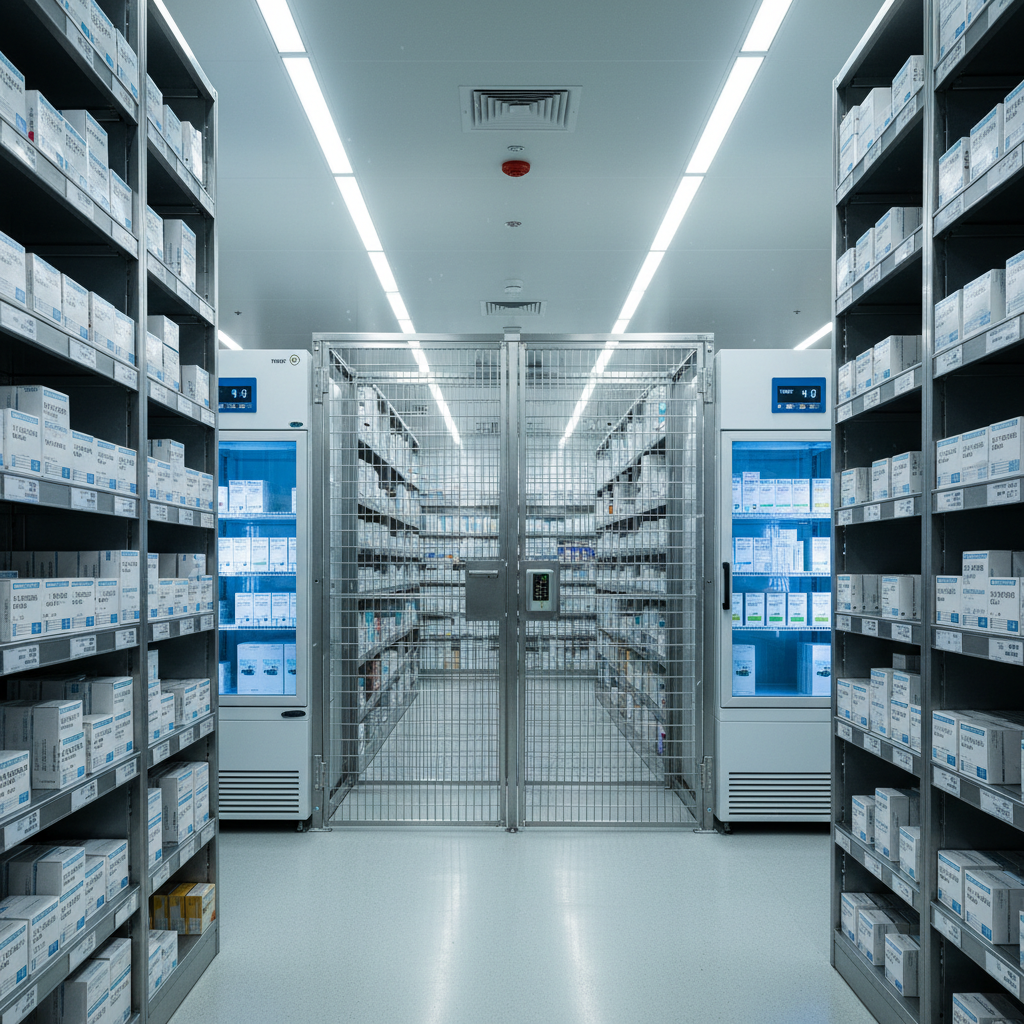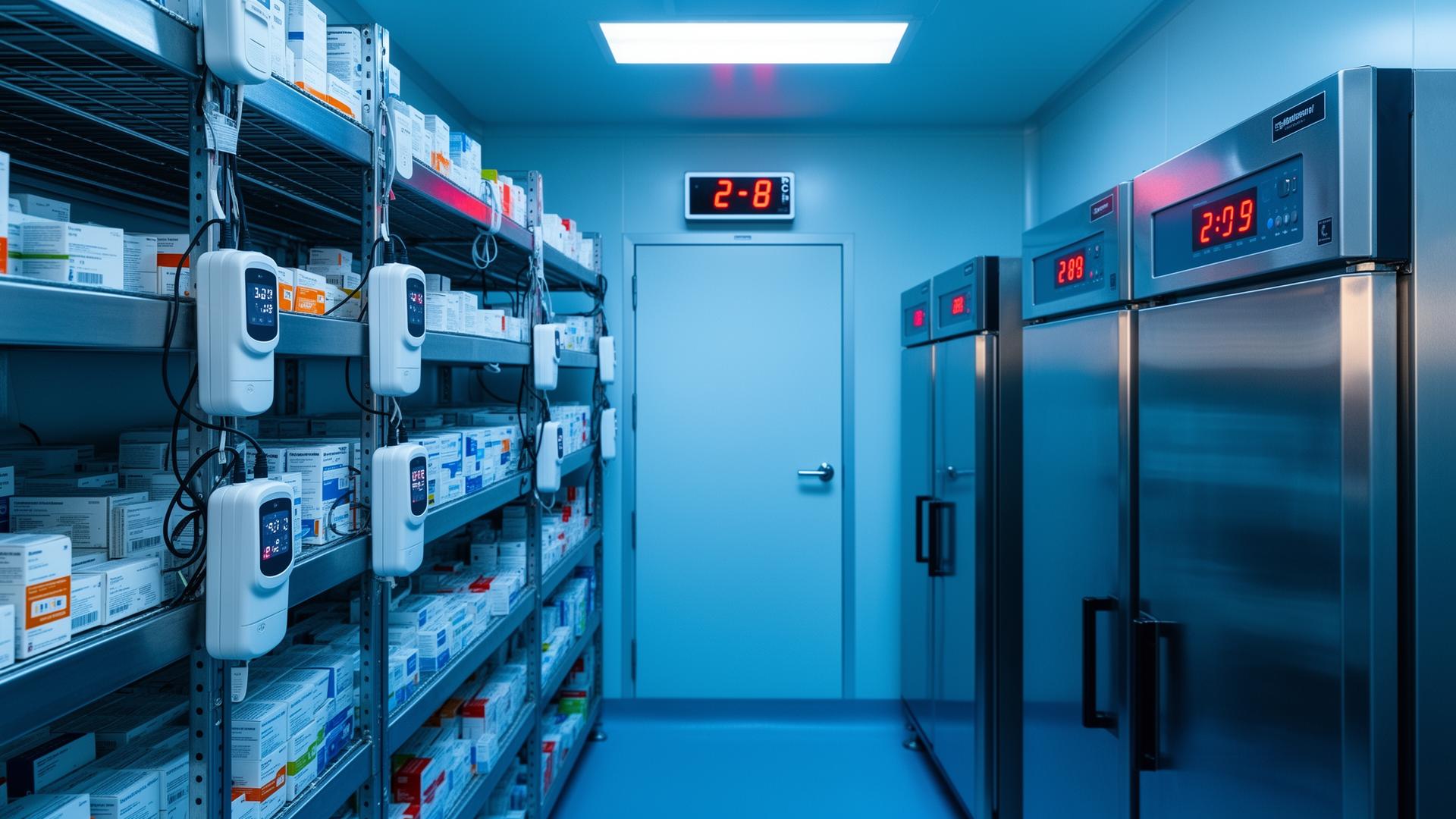
Most UK medical cannabis products are licensed or specified for storage at 15–25 °C, with some formulations requiring 2–8 °C. Whatever the range, EU GDP Chapter 3 is unambiguous: the wholesaler must demonstrate, with data, that conditions inside the storage area and in transit stay within the labelled range — not just on average, but at every point a product can sit.
What mapping actually means
Temperature mapping is a planned study that places calibrated data loggers across a storage area (or vehicle, or shipper) at high and low points, near doors, near heat sources, and at the deepest interior — and runs them through a representative load and cycle (summer / winter / loaded / empty).
A defensible mapping study includes:
- A written protocol approved before the study begins.
- Calibration certificates for every logger, traceable to a national standard.
- A justified number and placement of loggers.
- At least one full summer cycle and one full winter cycle, or a justified equivalent.
- An open-door / power-loss challenge.
- A written report identifying hot and cold spots, with corrective actions and a date for re-mapping.
Re-mapping is required after significant changes — new racking, HVAC replacement, layout changes, or a change in maximum load.
Ongoing monitoring
Fixed continuous monitoring sits at worst-case locations identified by mapping. Inspectors expect continuous logging at a defined frequency (commonly every 5–15 minutes), alarms routed to a named on-call person, a written response procedure, and trended data signed off by the Responsible Person on a defined cadence.
The single most common GDP finding here is "alarms are configured, but there is no evidence anyone reviewed the data". The fix is procedural, not technical.
Handling an excursion
When a deviation occurs, the wholesaler must be able to show:
- How quickly it was detected.
- Which batches were exposed, for how long, and how far outside the labelled range.
- A documented assessment by the RP against the manufacturer's stability data.
- A CAPA addressing the root cause.
Quarantine should default to "stop supply pending RP review", not the other way round.
Transport: the link most underestimate
GDP Chapter 9 makes the wholesale dealer responsible for conditions in transit, even with third-party couriers. That means a documented courier qualification, a written technical agreement, qualified shippers with documented seasonal hold times, temperature loggers on cold-chain and long-lane shipments, and a customer receiving check that records the log and reports excursions.
Documents inspectors will ask for
- The current mapping report and re-mapping schedule.
- The last 12 months of continuous monitoring data for at least one area.
- The excursion log and the full file for any flagged excursion.
- The qualified courier list with technical agreements on file.
- Shipper validation reports for any cold-chain packouts.
The structured drill in our MHRA GDP inspection readiness guide walks through this evidence pack.
Cold chain interacts with WDA(H) and Home Office licence
Two things often catch importers out:
- The WDA(H) must list every storage condition and area used. Adding a 2–8 °C fridge later is a variation, not a quiet addition. See the WDA(H) application checklist.
- Storage of Schedule 2 controlled drugs carries safe-custody requirements that sit alongside temperature controls — covered in the Schedule 2 controlled drugs licence guide.
How Medicexum helps
Medicexum supports wholesalers in writing temperature mapping protocols, reviewing third-party reports for inspection-readiness, designing monitoring and excursion SOPs, qualifying couriers, and preparing the full cold-chain evidence pack — see MHRA compliance services and EU GMP importation. For a second opinion on a mapping report before inspection, get in touch.